
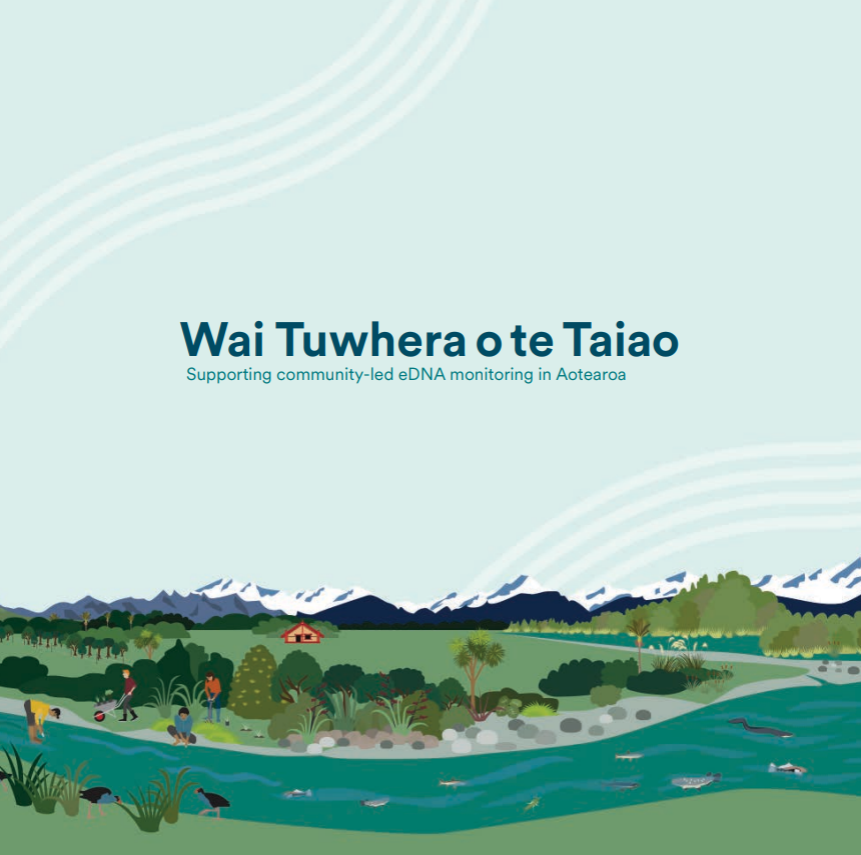
Five years of partnership with the Environmental Protection Authority supporting community-led eDNA monitoring across Aotearoa (New Zealand)
Image credit: Wai Tuwhera o te Taiao book via the EPA (NZ).
When the Environmental Protection Authority (EPA) began exploring environmental DNA around 2019, testing was complicated and expensive. Sampling meant collecting water in bleach-cleaned bottles, filtering it with a bulky pump and keeping it refrigerated. There was also no commercial eDNA lab in New Zealand, so samples would have to be sent to Australia for analysis. When the EPA shared this plan with Te Tini o Hakuturi, a group of Taranaki Whānui kaitiaki (guardians), the group explained that sending DNA overseas, which carries mauri (life force), wairua (spirit) and whakapapa (genealogy), did not align with tikanga Māori (Māori customs and practices). If the programme was going to work, the samples needed to stay in Aotearoa.
The timing lined up. Wilderlab had just been established as New Zealand's first commercial eDNA provider, and was developing the simple syringe-based kits now used across the country. This meant samples could be processed here, and the EPA could work closely with our team as the kits took shape. The result was Wai Tuwhera o te Taiao - Open Waters Aotearoa, a nationwide community science programme built on a clear set of principles: all samples stay in Aotearoa, all projects are community led, groups design their own projects, and all tests and data are owned by the groups themselves.
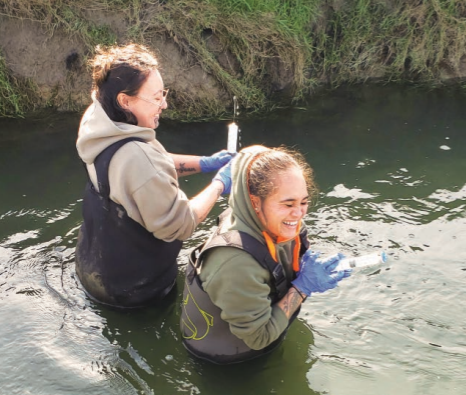
Image credit: Wai Tuwhera o te Taiao book via the EPA (NZ).
The response was immediate. In 2021, a one-off trial offering free kits to community groups, hapori Māori (Māori communities) and schools drew 200 registrations and more than 400 kits were sent out. Over the following years the programme moved to a contestable call for community-led project proposals, supported by funding from MBIE's Unlocking Curious Minds fund, the New Zealand Landcare Trust and others. Wilderlab supported this through kit sponsorship, match-funding discounts so groups could partner with councils and iwi (tribes) to buy additional kits, and sponsorship of the 2024 Revitalising our rivers and 2025 Tuakana-teina (older and younger mentoring) project rounds. Over five years, the programme has provided more than 3,000 eDNA tests and supported over 60 community-led monitoring projects, and a wide-reaching Cyclone Gabrielle response project designed and led by impacted iwi, hapū and communities.
Our team has also been on the ground throughout, presenting at webinars, wānanga (gatherings for learning and discussion) and community events around the country, answering practical questions about sampling and helping groups make sense of their results.
For many groups, the value was in being able to answer their own questions. "It's empowering to be able to do it yourself and collect your own information…to just be given the tools," says Kathryn Gale, who led the Ngāti Pāhauwera Development Trust's eDNA project. Hamiora "Sam the Trapman" Gibson, who led two Eastern Whio (blue duck) Link projects, said the beauty of the programme was that groups could decide what they wanted to find out and "everyone just got out of the way."
The partnership has shaped how we work as a lab, too. When Wilderlab launched, we used a standard set of laboratory terms and conditions. Te Herenga, the EPA's national network of Māori environmental practitioners, pointed out that these didn't reflect data sovereignty in a te ao Māori (Māori world view) context. Working with Te Herenga members and project groups, we revised our terms so that all information generated from a sample is owned by the purchaser, and added a step to the ordering process so sponsors can buy kits on behalf of a group without becoming the owner of the data.
"As a scientist coming into this from an academic background, it wasn't something that I had ever really thought of before," says Wilderlab founder Dr Shaun Wilkinson. "The journey of going from a broad set of standard lab terms and conditions to what we have now was very much a result of listening very intently to the feedback that we were getting through the Wai Tuwhera participants."
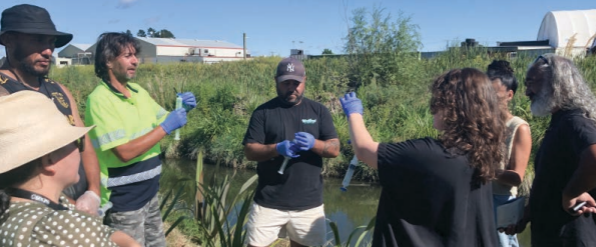
Image: Amy Gault demonstrates eDNA testing at the Tīēki Taiao day, 2024. Credit - Wai Tuwhera o te Taiao book via the EPA (NZ).
Community data has also had wider benefits. In 2023, a Wai Tuwhera project with the National Fieldays Society and the New Zealand Landcare Trust sampled the Waikato River near Mystery Creek. When the invasive golden clam was discovered at nearby Lake Karāpiro, a review of the eDNA results showed it had been present in the river since at least September 2022. Because golden clams aren't on the national notifiable organisms register, they hadn't been flagged automatically. Waikato Regional Council has since given us a regional watchlist of pest species, which are now scanned for alongside notifiable organisms.
Five years on, Wai Tuwhera has shown what's possible when communities are given the tools to monitor their own places, on their own terms. We're proud to have been part of it from the start and look forward to seeing where the next five years take it.
Read more about Wai Tuwhera o te Taiao on the EPA's website.