
Finding hidden invaders: eDNA for island rodent surveillance
Invasive predators such as rats and cats are one of the biggest threats to island wildlife, and removing them is one of the most effective conservation tools available. But a successful eradication planning depends on understanding which invasive species are present, and conventional surveys like trapping can be slow, labour intensive and prone to missing species in remote or rugged terrain. Island Conservation wanted to know whether environmental DNA (eDNA) could provide additional information on invasive mammal presence before eradication work began.
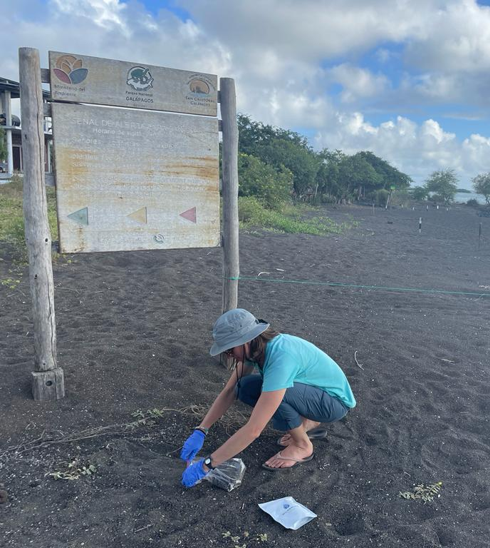
Island Conservation field teams collected samples from three very different islands. On Ulong in Palau, a forested karst limestone island with sandy beaches and marine lakes, they sampled beach sand, lake water and swabs from field boots ("shoeDNA"). On Late in Tonga, a volcanic rainforest island, they collected soil, tree leaves, tide pool and lake water. On Floreana in the Galápagos, with its lush highlands and arid lowlands, they sampled sand, freshwater bodies, tide pools and running water after rain. Nearby islands known to be rat free were also sampled as a check against false positives, and Wilderlab analysed the samples to identify which invasive mammals were present.
eDNA picked up target species on every invaded island, often from a relatively small number of samples. On Ulong Island, eDNA identified multiple rodent species, including detections that had not previously been documented through available survey efforts. The work provided the first evidence of Rattus tiomanicus in Palau's Rock Islands and supported evidence of other suspected invasive rodent populations. Beach sand was particularly informative there. On Late, the Pacific rat (Rattus exulans) was detected most frequently in leaf samples and rarely in soil or water, consistent with its arboreal habits. On Floreana, eDNA detected black rats (Rattus rattus), house mice (Mus musculus) and feral cats (Felis catus), with rats and cats found in freshwater and sand, and mice only in running water collected after rain. Nearby islands known to be free of invasive rats returned no detections, increasing confidence that positive detections reflected real presence rather than contamination or false positives.
The project also showed that sampling strategy matters. Beach sand proved particularly informative where available, while tree leaves were effective for detecting arboreal rodents, highlighting the importance of aligning eDNA sampling methods with species ecology. The findings suggest that eDNA may serve as a useful complementary surveillance tool for characterizing invasive mammal communities and informing feasibility assessments and planning, particularly across large and remote island systems.
The project was conducted in close partnership with government agencies and protected-area managers in Palau, Tonga and the Galápagos. Beyond generating data, the work helped build local familiarity with eDNA approaches through consultation, permitting processes and biosecurity training. It also highlighted practical considerations for broader application, including the value of field-deployable tools or in-country laboratory capacity for time-sensitive decisions, as well as clear guidance on consent, data stewardship and equitable access.
For island restoration programs, determining which invasive species are present is one of the first steps in planning effective management actions. This project suggests that, when paired with appropriate sampling design and existing survey methods, eDNA can provide useful information early in the planning process and help reduce uncertainty about invasive mammal presence across island landscapes.
Read more about Island Conservation's projects.