
Wilderlab eDNA Scholarship
Supporting the next generation of eDNA research
Each year, Wilderlab funds the Wilderlab eDNA Scholarship at Te Herenga Waka Victoria University of Wellington, supporting postgraduate students to bring DNA-based tools into their research. Our 2026 recipient, PhD student Mollie Rickwood, is using it to uncover a hidden link between deep reef sponges and some of New Zealand's best-loved fish.
Mollie's research focuses on mesophotic sponges, which grow below 30 metres in the "middle light zone" of the ocean. These sponge gardens provide habitat for many coastal fish, but how much fish actually rely on them for food has been hard to pin down. Her long-term goal is to build a body of evidence showing how species such as snapper, blue cod and tarakihi depend on these sponges, both as shelter and as part of their diet, and to strengthen the case for including these habitats in New Zealand's marine protected area network.
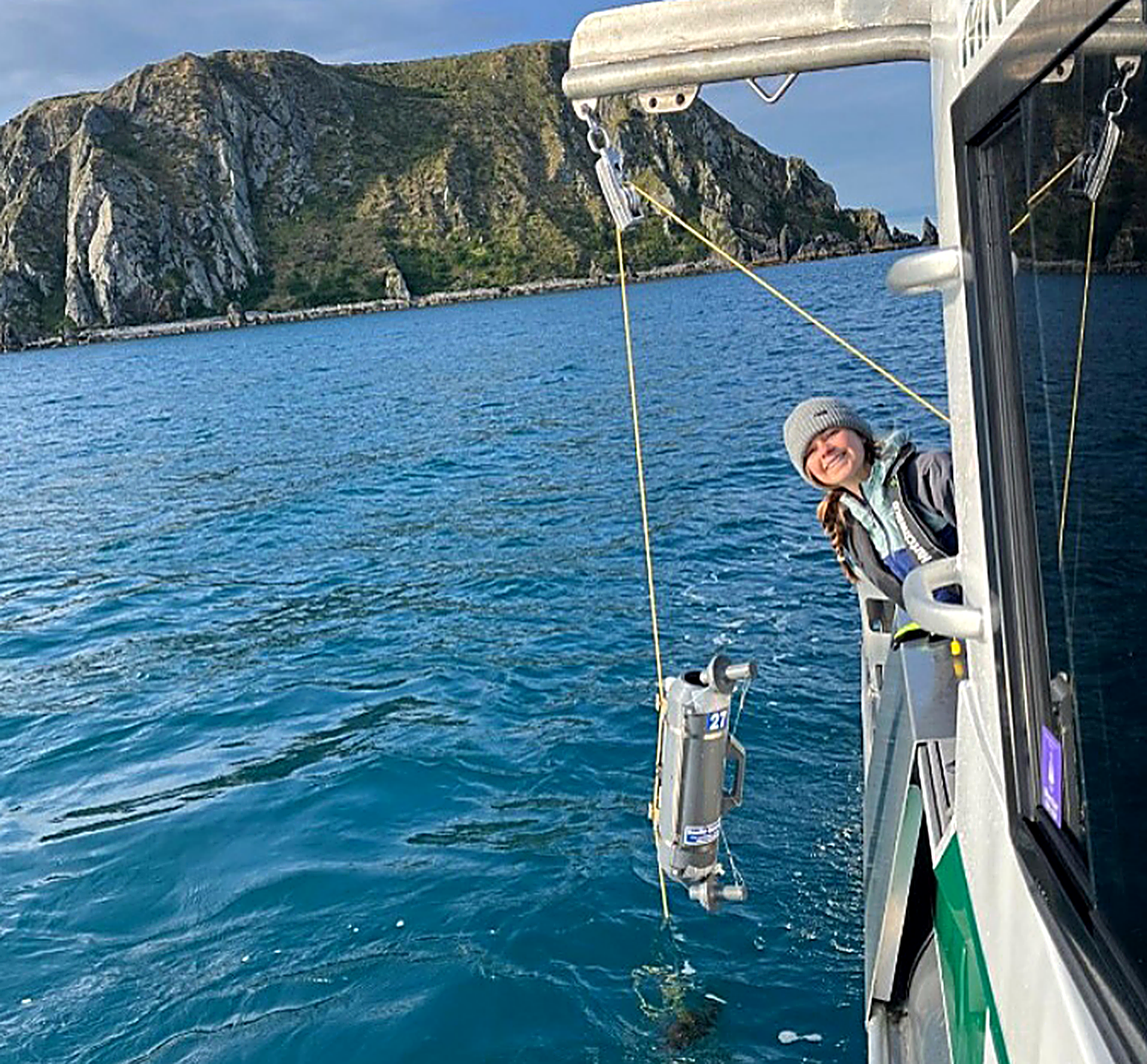
Working from Victoria University's research vessel Kauneke, Mollie and her team sampled 78 fish across eight species from a shallow mesophotic reef off the northern tip of Mana Island, near Porirua. Every fish's stomach contents were first examined by eye, which revealed that sponge-dwelling invertebrates such as decorator crabs, hermit crabs and brittle stars were important prey for several species. Visual analysis has its limits, though. Soft-bodied prey breaks down quickly during digestion, and many items can only be identified to broad groups. The scholarship allowed Mollie to add DNA metabarcoding of the stomach contents, identifying prey at various stages of digestion, often down to genus or species level.
The DNA results backed up the visual findings and added a much sharper picture of what each fish was eating. Crabs and other fish were the main prey overall, but sponge DNA turned up in the stomachs of blue cod, scorpionfish and scarlet wrasse, pointing to direct or indirect sponge consumption. Species like snapper and kahawai showed no sponge DNA, but many had eaten sponge-associated animals such as copepods, amphipods and polychaete worms, or detritivores like brittle stars that may feed on material shed by sponges. Together, these results let Mollie map out the pathways linking sponges to fish across the reef food web.
Mollie presented this work at the Australian Marine Sciences Association conference in Canberra in September 2026, where she received the Minderoo Oceanomics Centre at UWA Prize for best oral presentation. She has since secured additional funding to purchase another 24 Wilderlab kits, doubling her sample size. The findings now form the foundation for the rest of her PhD, including a stable isotope and fatty acid study and an ecosystem model exploring how these feeding links affect fish biomass on the reef.
In Mollie's words, by making the DNA metabarcoding possible, the scholarship "has improved the scientific rigour of this work and provided important insights into the diets of the fish species examined that would have otherwise remained elusive."
We're proud to support Mollie's work and look forward to welcoming our 2027 scholarship recipient.
The expedition brought together OceanX, Minderoo Foundation, the Minderoo OceanOmics Centre at the University of Western Australia, the Western Australian Museum Boola Bardip, the Living High Seas Initiative and Nanyang Technological University, Singapore. The data may help inform future management of the high seas under the international Biodiversity Beyond National Jurisdiction (BBNJ) Agreement.