
A coral telling a climate story
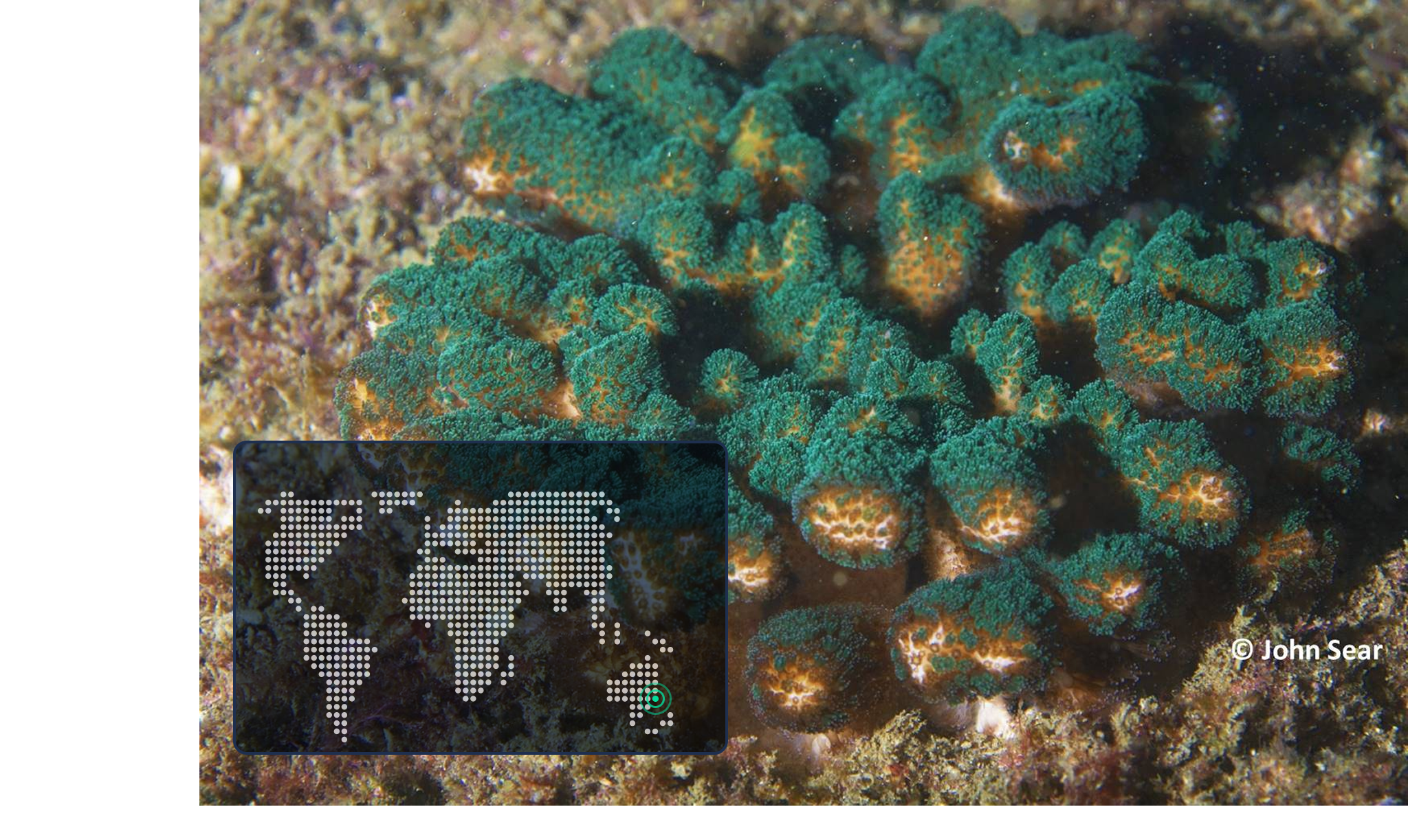
Nestled between Manly Beach and Shelly Beach, Cabbage Tree Bay Aquatic Reserve is one of NSW's most loved marine environments.
A subtropical coral spreading through this Bay is telling a bigger story about a warming ocean. Using Wilderlab’s eDNA analysis, John Sear can track its spread beyond what can be seen underwater. It’s a powerful new way to document climate-driven change in marine biodiversity.
Underwater naturalist and photographer John Sear has spent years getting to know the bay intimately, documenting its fish life in his book Fishes of Cabbage Tree Bay Aquatic Reserve and building one of the most detailed records of the reserve's biodiversity. Working alongside the Friends of Cabbage Tree Bay, he is now using Wilderlab's eDNA analysis to add a new dimension to that record: a rigorous, long-term biodiversity baseline that captures what even the most experienced observer cannot see. Among the most scientifically significant detections is Pocillopora aliciae, a subtropical branching coral only recently found in Sydney waters.

John Sear
Underwater naturalist and photographer.
John first noticed it around 2015, and the change since has been dramatic. What began as colonies no bigger than a football now forms sheets of coral up to 25 metres across. Initially found in about 13 to 15 metres of water, it has spread into the shallower, popular Shelly Beach area at depths of around 3 metres, and is already providing habitat for tropical fish and crab species well south of their usual range. The coral's arrival is a climate signal. As the East Australian Current strengthens and warms, it carries tropical and subtropical species southwards along the coast (a pattern seen worldwide, with corals in Japan moving poleward at roughly 14 kilometres a year). Locally, Pocillopora aliciae spreads by dropping polyps onto the surrounding sandstone, slowly establishing new colonies. Watching it advance is, in John's words, both exciting and alarming.
Detecting the coral's DNA in the water column, without having to physically locate individual colonies, is exactly what Wilderlab's new marine 28S assays were designed for. It is a striking demonstration of how eDNA can track climate-driven range shifts in real time. By sampling regularly, John can pick up seasonal changes, detect arrivals and departures, and build towards an educational "wheel of life" for the reserve. Where his book captures what can be seen, eDNA captures what cannot.
#CabbageTreeBay #Manly #ClimateChange #MarineBiodiversity #CoralReef #PocilloporaAliciae #EastAustralianCurrent #CitizenScience #Conservation Video to add about this discovery - https://www.northernbeaches.nsw.gov.au/services/disability/website-help/accessible-videos/video-life-below-water-corals?fbclid=IwY2xjawPKbQpleHRuA2FlbQIxMQBzcnRjBmFwcF9pZBAyMjIwMzkxNzg4MjAwODkyAAEeBi63tiuUSLGgO9up5L0FiFbOXa7NO-iL1n6txKDIWxZkReWvvymo7zdw9s4_aem_G0rjZCTEMoQEvCdXTCVfMQ