
Reading whole ecosystems
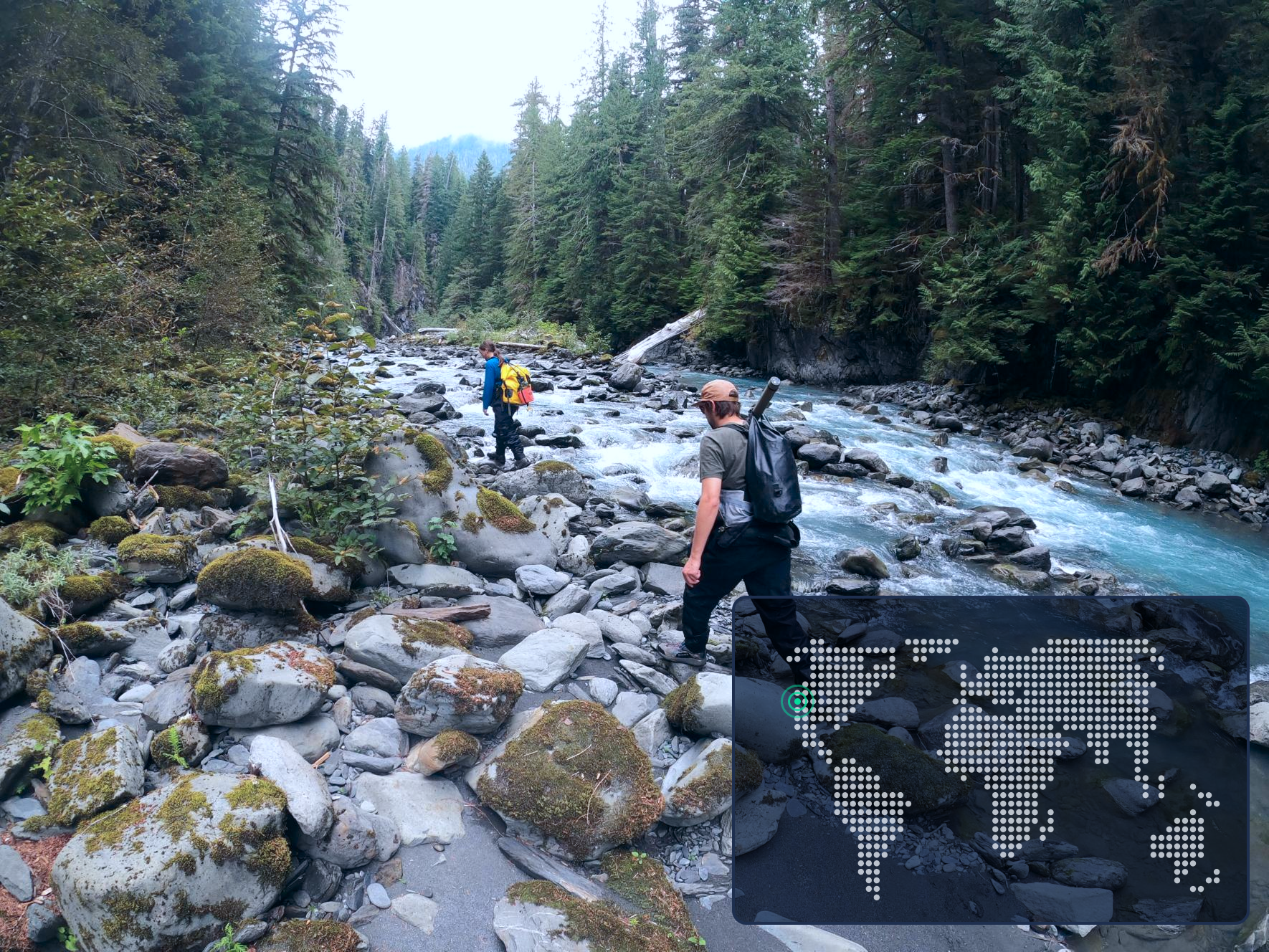
eDNA and the Coastal Watershed Assessment Project
On Washington State's outer coast, salmon are central to culture, food, and law, but the runs have been in decline for roughly 50 years.
The freshwater systems that support them are under pressure from warming water, habitat loss, and invasive species, and more than 86% of the region's waters fail basic health thresholds. Much of the landscape is also remote and poorly surveyed, which leaves managers with a hard problem: you cannot protect fish well if you do not know where they are.
The Coastal Watershed Assessment Project (CWAP), coordinated by John Hagen at the Northwest Indian Fisheries Commission (NWIFC) with four coastal treaty tribes (the Makah, Quileute, Hoh, and Quinault), set out to close that gap. As co-managers of the salmon resource, the tribes make fisheries decisions cooperatively and need solid, standardised data to do it. eDNA offered a way to generate that data across large, difficult terrain far faster than nets, traps, or dive surveys could.
The programme began in 2018 with a single hard-to-find species, the Olympic mud minnow, then expanded to salmon. Snorkel surveys run alongside early samples confirmed the method (eDNA detected everything the divers saw, and then some), and in 2022 eDNA was formally accepted into the region's official fish distribution database, putting it on the same footing as traditional surveys for management decisions. Today CWAP holds around 1,200 sites and 2,400 samples across a data-poor region about the size of a small country.
In July 2025 the project switched its sequencing to Wilderlab. In the field, teams collect each stream water sample by manual syringe pumping or pumping with Wilderlab's SC600 peristaltic pump, targeting high-quality salmon habitat such as pools and undercut banks. Back in the lab, Wilderlab's multi-marker approach runs 11 assays per sample and turns a salmon survey into a full community snapshot. One sample from a small, unnamed creek returned 167 kinds of insect, 37 plants, six fish, six mammals, and hundreds of bacteria. Coho salmon alone now appear at 652 sites, mapping around 140 kilometres of coho streams missing from the regional database. The same data flags invasive fish and plants early and picks up species that rarely show up in routine surveys, from endemic salamanders to beaver.
From one fish in 2018 to whole communities today, CWAP shows how much a single eDNA programme can do: mapping target species, validating traditional surveys, providing early warning for invasives, tracking whole-of-ecosystem biodiversity, and feeding evidence straight into management and restoration.
#SC600 #Salmon #FisheriesManagement #InvasiveSpecies #FreshwaterEcology #TribalCoManagement #PacificNorthwest