
Establishing biotic baselines in Sydney's urban streams
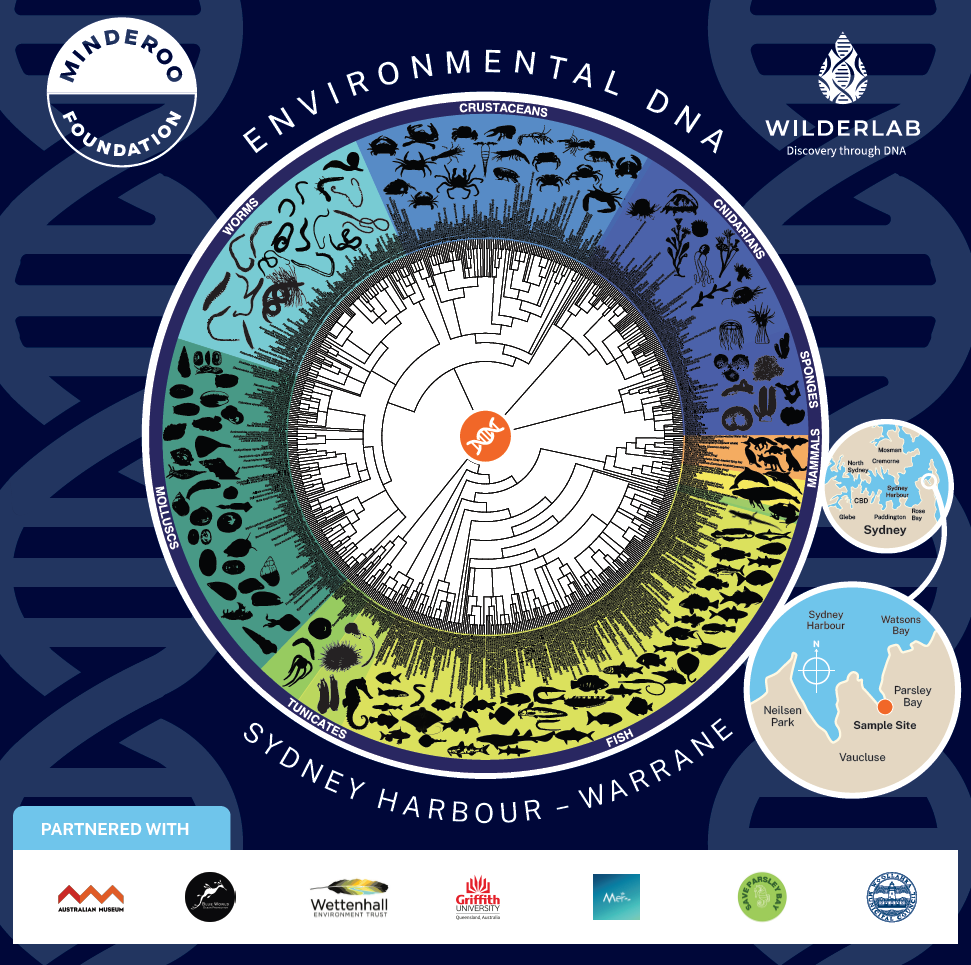
How Tree of Life eDNA metabarcoding revealed hidden biodiversity in the Woollahra area, and what it could mean for urban monitoring
Urban streams and ponds are often overlooked when it comes to biodiversity monitoring, yet they can harbour threatened species and support important ecological functions. With limited baseline data for most urban waterways, it's hard to know what lives there, let alone track how communities change in response to pollution, development or restoration.
A team led by researchers at Griffith University and the Australian Museum, with Wilderlab founder Dr Shaun Wilkinson as a co-author, set out to test whether eDNA could fill that gap. Working in the Woollahra Municipal Council area in Sydney's Eastern Suburbs, they sampled five freshwater sites across local parks, including the duck pond at Trumper Park, the pond and creek at Cooper Park, and two sites at Parsley Bay Reserve Creek. Samples were collected using Wilderlab syringe kits and analysed with our multi-assay Tree of Life (ToL) sequencing pipeline, which looks for DNA across the full range of life in a single water sample.
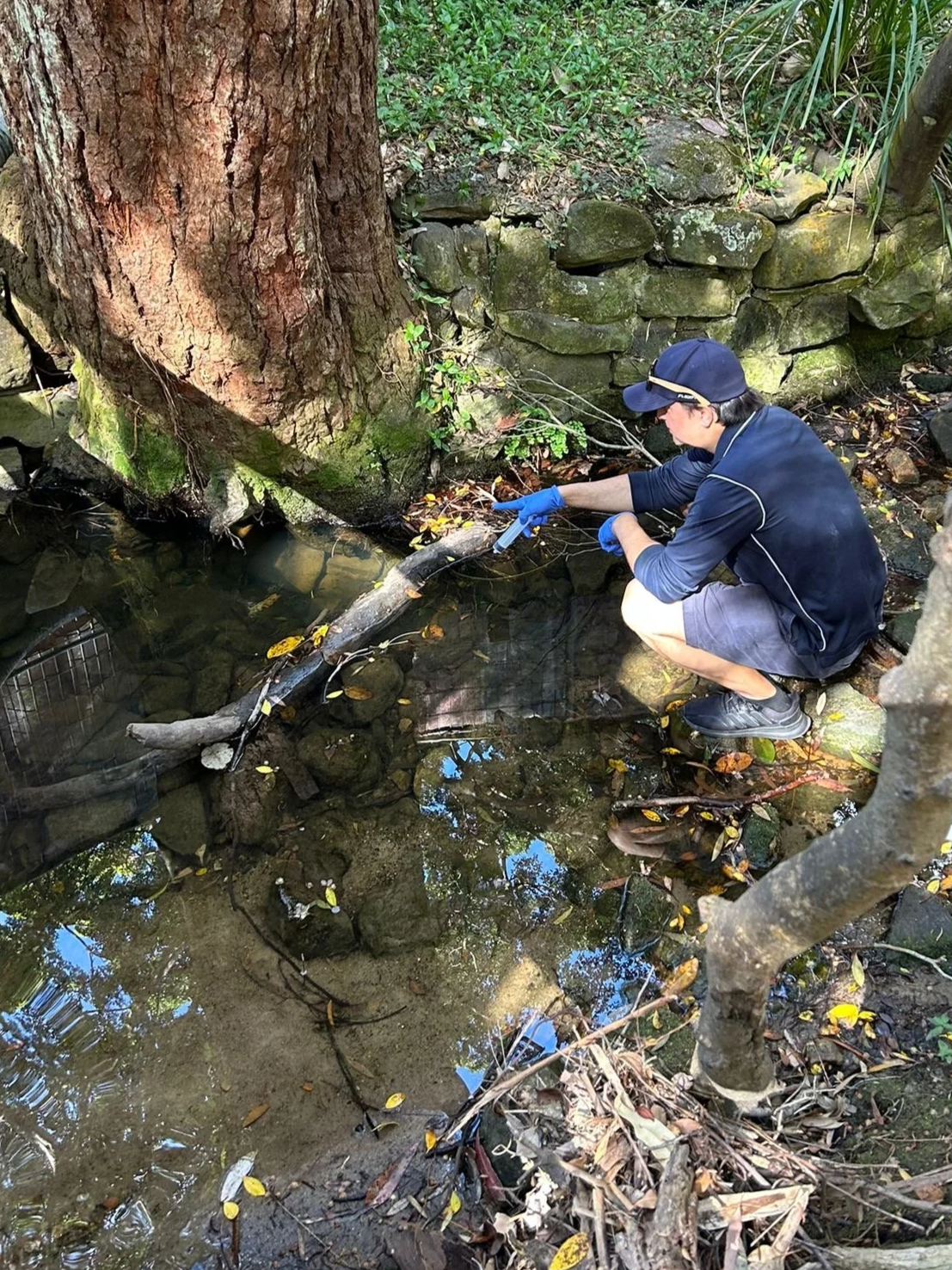
Above: Joey DiBattista taking an eDNA sample at Parsley Bay Reserve Creek (upper site).
The results showed just how much traditional surveys can miss. The team detected 1,038 taxa, from bacteria and algae through to invertebrates, fish and other vertebrates. Around 76% of the taxa detected had no prior records in the region on the Atlas of Living Australia.
The study also tracked biodiversity over 20 months at Parsley Bay Reserve Creek, sampling at both upstream and downstream sites. Taxon richness varied between 168 and 313 taxa across the sampling period, with the lowest point recorded just two weeks after a sewage incursion in February 2023. Seasonal changes and rainfall also influenced what was detected, with microorganisms and photosynthetic organisms proving the most responsive to environmental change. This makes them potentially useful early indicators of shifts in stream health.
The researchers also applied Wilderlab's Taxon-Independent Community Index (TICI) to assign an ecological health score to each site. The TICI was originally developed for New Zealand freshwater environments, but the study found that 1,967 of the 3,000 indicator sequences in the model also occur in Australian waterways. This supports the case for adapting the index for use in Australia, giving councils and catchment managers a single, comparable health score for urban streams.
Together, the findings make a strong case that eDNA is ready to become a standard part of how cities monitor and protect their freshwater biodiversity. A single sampling program captured a far broader picture of urban stream life than existing records, picked up the impact of a pollution event, and provided a baseline that can be built on over time.
This study builds on earlier work by the same research group in Sydney Harbour, which used Tree of Life eDNA metabarcoding to catalogue more than 1,400 taxa from seawater samples and found that each habitat zone in the harbour supported a distinct biological community. Read the related paper: DiBattista et al. (2024), Tree of life metabarcoding can serve as a biotic benchmark for shifting baselines in urbanized estuaries, Environmental Research.
Check out the results of the Parsley Bay sampling on our Explore map by entering PARSLEY into the sample field.